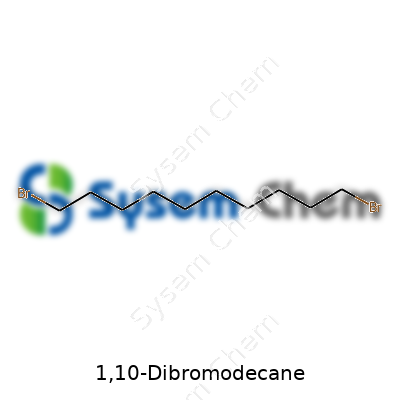
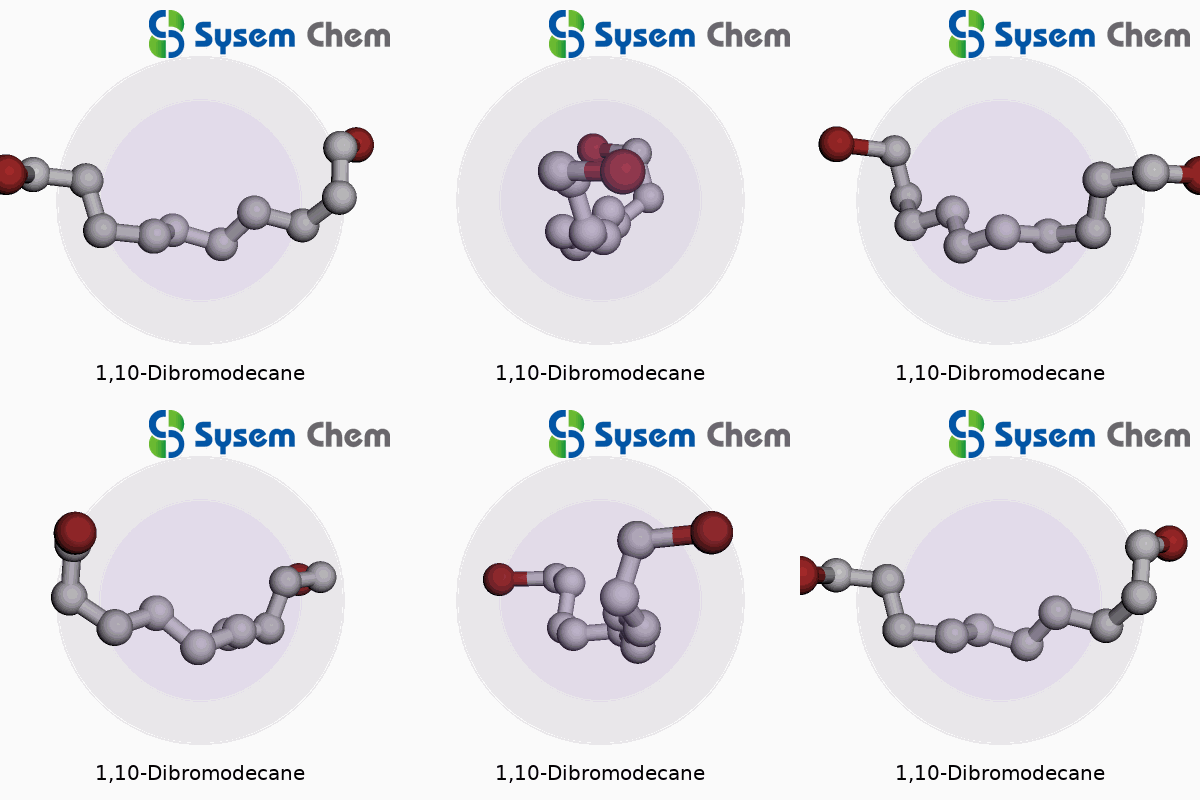
1,10-Dibromodecane: A Closer Look at Its Role and Impact
Historical Development
Chemists started looking for reliable dibromoalkanes during the middle of the 20th century, tracking how longer molecular chains acted as both reactants and intermediates. 1,10-Dibromodecane took shape as one of those “middle ground” compounds, ten carbons long with bromo groups anchoring both ends. Researchers drew up methods to get clean, straight-chain material, and early work focused on controlling its reactivity in substitution reactions. This molecule found itself at the center of studies on organic synthesis, as well as broader explorations into versatile building blocks suited for more complex molecular structures.
Product Overview
1,10-Dibromodecane offers two bromine atoms on both tips of a decane backbone. Alpha and omega positions—meaning those terminal ends—carry these reactive groups, letting chemists use it as a valuable linker or precursor. This structure creates an opportunity: react one or both ends, or use the sturdy ten-carbon chain to space out functional groups in more complicated molecules. A lot of today’s chemical industries, from specialty polymer synthesis to pharmaceutical intermediate production, rely on such well-defined brominated alkanes.
Physical & Chemical Properties
On the bench, 1,10-Dibromodecane comes as a heavy, colorless to pale yellow oil. Its molecular formula stands as C10H20Br2 with a molecular weight right around 315 grams per mole. The boiling point usually ranges between 170–210°C under reduced pressure, and the density sits just above 1.3 g/cm3 at room temperature. The bromine atoms add quite a bit of heft and affect its solubility: it dissolves easily in organic solvents like chloroform or diethyl ether, avoiding water and most alcohols. The molecule’s symmetry and relatively long chain means it stays pretty nonpolar, while those bromine atoms deliver high reactivity for nucleophilic substitution and elimination reactions.
Technical Specifications & Labeling
Bottles usually come with clear labeling, focused on concentration and lot number. Most commercial suppliers specify purity above 98%, listing common impurities with tight thresholds: moisture below 0.1%, any DBCP below measurable limits. Each shipment often includes a certificate of analysis verifying NMR and GC-MS checks. Hazard information gets clear placement—flame pictograms, R phrases for skin and eye irritation, and guidance on gloves and goggles. As someone who’s handled volatile alkyl halides, I always appreciated explicit labeling, since confusion often leads to unnecessary risk.
Preparation Method
The standard approach relies on treating 1,10-decanediol with phosphorus tribromide or hydrobromic acid. The diol reacts fully, swapping hydroxyl groups for bromine in a clean two-step process. Sometimes, the method uses thionyl chloride along with sodium bromide, which gives a high yield with straightforward work-up and minimal side products. Any excess reactant and solvents get removed under vacuum, and distillation finishes the job. The differences in preparation often depend on the batch size, with industrial scale processes favoring continuous flow systems over glassware.
Chemical Reactions & Modifications
This molecule acts as a solid platform for both SN2 and elimination reactions. Those bromides are primed for substitutions—a typical route sees amines or thiolates attacking either end, forming symmetric or asymmetric products. In one case, polymer chemists link monomers across the chain, producing specialty thermoplastics or tailored surface coatings. Grignard or metal-halogen exchange opens doors for more complex coupling steps. Chemistry teachers often use dibromodecanes to demonstrate classical organic transformations, since results come out reliably and cleanly.
Synonyms & Product Names
Over time, 1,10-Dibromodecane collected a few alternate handles: Decamethylene dibromide, 1,10-Decanediyl dibromide, and Decamethylene bromide. Different chemical suppliers sometimes list catalog numbers, but the backbone stays the same—ten carbons, two terminal bromines—and so does the expected behavior in synthesis.
Safety & Operational Standards
Safety manuals lay it out straight: liquid and vapors irritate skin and eyes, and gloves plus face shields are mandatory around open containers. Proper fume hoods make a difference, as the compound’s volatility can catch the unwary, especially on a warm day. Spills clean up best with activated charcoal or absorbent pads, always with full ventilation. Waste handling takes priority, given the environmental persistence of alkyl bromides—incineration in controlled setups stops these molecules from finding their way into waterways. Each shipment travels in sealed glass or compatible plastic, since careless storage sharpens health risks and degrades product quality.
Application Area
Polymer science sees heavy use of 1,10-Dibromodecane as a chain extender, helping tune mechanical properties and crosslink density. In pharmaceutical research, it serves both as a spacer and as an intermediate for more exotic synthons: some antimicrobial and antifungal agents start with a dibromoalkane of just the right length. Organic semiconductors sometimes depend on dibromodecanes for their self-assembling properties, thanks to that nice balance of hydrophobic backbone and reactive terminals. Academic labs put it to work in multi-step syntheses, sandwiched between longer chains, aromatic rings, and heterocycles. The everyday impact reaches as far as smart coatings, biomedical scaffolds, and components of engineered materials.
Research & Development
Much of the innovation in the field hinges on controlling reactivity. Chemists look for milder conditions for substitution or greener solvents, hoping to reduce side reactions and energy use. In my own work, the challenge always came down to purity and reproducibility—how to get each batch performing predictably without wasting time on column chromatography. New approaches appear every year: photocatalysis, flow reactors, less corrosive brominating reagents. Teams in both academic and industrial settings run pilot studies on bio-based decanediols, exploring options for sustainable sourcing. These developments often spark connections across disciplines, bringing polymer engineers, green chemists, and process innovators into the same room.
Toxicity Research
Animal studies and in vitro data point to irritation of skin and mucous membranes, with the added risk of inhalation damage in high concentrations. Long-term exposure hasn’t shown solid evidence for carcinogenicity, but regulatory guidelines call for tight exposure limits in manufacturing. Reports from industrial settings flag occasional dermatitis and mild respiratory symptoms in exposed workers, reinforcing the need for protective measures. Environmental fate gets ongoing scrutiny, since brominated compounds resist breaking down in soil and water. As a former lab safety officer, I saw firsthand how replacing open benchtop work with sealed reactors kept exposure risks low, and rigorous monitoring made a clear difference for team health.
Future Prospects
Sustainability sits high on the agenda as more industries push for renewable feedstocks and lower-impact synthesis. Green chemistry principles shift the focus to biodegradable alternatives or more selective synthetic steps, cutting both resource use and waste. Emerging fields—like flexible electronics, advanced membranes, and responsive biomaterials—need dibromo-functionalized chains with tunable length and reactivity. I expect to see process improvements in both the lab and plant scale, dialing in better yield and lower energy inputs. Tracking regulatory updates and toxicity findings will shape future applications, nudging the chemical supply chain toward safer, cleaner practices without sacrificing performance.
1,10-Dibromodecane and Its Place in Modern Industry
1,10-Dibromodecane doesn’t get household attention, but its fingerprint turns up all over chemical manufacturing. This colorless liquid, known by the molecular formula C10H20Br2, gets used heavily in the lab for building bigger and more complex molecules. Chemists grab it as a handy link between other chemicals. If you’ve worked in synthetic chemistry, you won’t be surprised to hear that this dibromo compound is a prized building block—those two reactive bromine atoms at either end of the chain make it perfect for joining with other pieces to make something new.
Synthesizing Polymers and Functional Materials
Big companies and universities put 1,10-dibromodecane to work to make specialty polymers. Polymer scientists use long alkyl chains with functional groups at both ends to create tailored plastics. This substance can help control the flexibility, durability, and solubility of the final product. Take polyamides or polyethers—adding this dibromide can boost properties in ways that satisfy demanding performance and safety standards. Some flame-retardant coatings also originate in a chemical route starting with 1,10-dibromodecane, showing up in cables or electronics insulation.
Pharmaceutical and Research Applications
Pharmaceutical innovation often starts with connections like the ones 1,10-dibromodecane helps to forge. Medicinal chemistry teams rely on reliable carbon frameworks, and the ten-carbon length in this compound allows it to serve as a spacer in molecular scaffolds. In the past, I’ve watched project teams use dibromodecane for tethering together biologically active fragments, hoping the new molecule binds or blocks a disease-related protein. It’s a calculated risk in the search for new antibiotics or antivirals, but that flexibility keeps this chemical in the toolkit.
Beyond drug research, 1,10-dibromodecane fuels the growth of advanced materials for batteries, electronics, and sensors. Electrochemistry studies benefit from its long hydrophobic tail and terminal reactivity. Researchers make surface-active agents or probe molecules, each time looking for more efficient or selective sensors. It isn’t glamorous, but it gets results.
Environmental and Health Concerns
With value comes the need for responsibility. The same reactivity that makes dibromodecane so helpful can threaten health or the environment without safeguards. It can irritate skin or eyes and may pose risks if released into water. At the bench, I can still picture those bold red hazard labels—a routine reminder for gloves, goggles, and good ventilation. Disposal, too, needs planning; unreacted molecules in the waste stream could linger or break down into toxic byproducts. This puts pressure on chemical manufacturers and labs to follow strict regulations and waste-management practices.
Paths Toward Safer and Greener Use
Regulators and companies worldwide continue searching for safer routes—greener solvents, less wasteful syntheses, and biodegradable alternatives. People working in the lab keep rethinking protocol design, all to cut out hazards and unnecessary exposure. Digital inventory systems and stricter tracking also reduce errors and accidental releases. There’s no shortcut here: safe chemistry requires training, respect for the risks, and a drive to innovate responsibly. I see the shift every year, with new guidelines and a steady push for lower toxicity while keeping up with the fast pace of scientific demand.
Breaking Down 1,10-Dibromodecane
Chemistry doesn’t usually turn heads in everyday conversation, but understanding the molecules behind substances makes a difference in research and manufacturing. Take 1,10-dibromodecane as an example. Its name carries a story about its makeup. This molecule has a ten-carbon chain called decane, and each end finds a bromine atom. Chemists represent this setup as C10H20Br2 — ten carbons, twenty hydrogens, and two bromines.
Why Structure and Formula Matter
Back in my days working alongside organic chemists, mistakes happened if someone read a chemical’s name and lost track of its true form. With 1,10-dibromodecane, nobody can afford to wing it. Each bromine atom waits at the tip of the decane chain, making this molecule useful for jobs where you need predictable reactions on both ends. Polymer scientists, for example, often look for molecules with this kind of symmetry when they try to build fancy materials that stretch or resist heat.
It’s tempting to overlook exact numbers when formulas read like alphabet soup, but precision matters. In the lab, adding something with an extra carbon or fewer hydrogens will change results. While a one-atom difference doesn’t sound much from the outside, it sets off a chain of new properties: melting temperature, reactivity, and toxicity shift. Drawing from hands-on experience, nothing stalls a project faster than realizing the molecule on the shelf isn’t the one the whiteboard promised.
Reliable Sources for Chemical Data
Trust goes a long way in chemistry. Scientific work leans on clear sources, and groups such as PubChem, ChemSpider, and Sigma-Aldrich provide validated data on this molecule. Each lists the same formula, ensuring consistency across research labs and industries. These institutions keep up with new studies, giving the rest of us a way to double-check that what’s in the flask matches what’s needed.
Practical Uses and Safety Concerns
Molecules like 1,10-dibromodecane serve as building blocks for bigger jobs. Manufacturers use it to make specialty polymers, surfactants, and intermediate chemicals. Its two bromine heads attach nicely to different groups, letting chemists tweak molecules for custom roles. I remember a project where the stability of a new plastic relied on a perfect chain just like this one — no shortcuts.
The flip side of working with such compounds rests with safety and environmental impact. Brominated chemicals often demand extra checks because some break down slowly and build up in soil and water. Organizations such as the EPA and OSHA track their use closely. I’ve watched processes shift as rules grew stricter, but those steps keep both workers and neighbors out of harm’s way.
Looking Ahead: Smarter Approaches
The world keeps asking more from chemistry, and the story behind a simple formula reminds people not to take shortcuts. Accurate data, clear labeling, and respect for safety guidelines keep things running smoothly, from the classroom bench all the way to industrial scales. Companies now invest in greener alternatives or tighter recycling methods to keep toxic substances out of the environment.
It’s easy to gloss over the letters and numbers that make up a formula like C10H20Br2, but real-world decisions trace back to that precise information. Whether you’re mixing compounds by hand or programming robots to build polymers, being clear on the basics still matters.
Recognizing the Risks
Anyone who’s worked in a lab or chemical storeroom for a while knows certain chemicals don’t mess around. 1,10-Dibromodecane falls right into that category. With bromine compounds, sharp fumes and skin irritation come quickly if you don’t follow safety basics. Direct exposure isn’t just uncomfortable—it can cause damage to skin, eyes, and your lungs.
Keen chemical handlers learn fast that letting safety slide to save time costs more than it helps. Respecting the hazards means paying close attention to how you store and move this liquid. Chemical resistance trumps convenience every time.
Storage: Controlled and Contained
I’ve seen plenty of storerooms packed floor to ceiling and poorly ventilated. That’s a terrible plan for any brominated hydrocarbon. Always stash 1,10-Dibromodecane in tightly sealed containers. Use only glass or high-grade plastics proven to resist halogens. Steel containers will rust or corrode from bromine vapor. Keep it away from direct sunlight and heat sources. Temperatures climb, pressure builds, and before long the container starts leaking or bursting. Cool, dry spots with steady temperatures are your best bet – think below 25°C, never letting it freeze. Fluctuations mean condensation and more risk of corrosion.
Don’t line up flammable or reactive chemicals next to your brominated stockpile. 1,10-Dibromodecane reacts with strong bases, strong acids, and active metals. If a spill happens, those neighbors could multiply your problems fast. I recommend a separate, marked section with built-in spill containment like trays or dedicated shelving. It’s not about being over-cautious; it’s about not having fires and toxic clouds in the workplace.
Handling: Simple Routines, Big Results
The mantra remains: gloves, goggles, and a decent lab coat. No matter how familiar you get, no bare hands or casual handling. Even a small splash can stick with you a long time. Use chemical-resistant gloves—nitrile works well here—and switch them often. Safety glasses aren’t enough. Go for splash-proof goggles or a face shield. Every time you decant, pour, or transfer, set up in a fume hood. Those vapors sneak up, and long-term exposure won’t show harm right away, but it accumulates.
For folks used to shortcuts, a minor leak or splash might seem like no big deal—just wipe it up. That doesn’t cut it with this chemical. Use absorbent materials compatible with halogenated organics, and clear the area until everything’s cleaned. Always have neutralizing agents and emergency showers within reach. If your skin catches a drop, rinse with plenty of water, and see a doctor if redness or pain lingers.
Training and Beyond Personal Safety
Safe chemical use grows out of good training. Don’t count on past experience with different organics to carry over to brominated decane. Thorough onboarding, written safety sheets, and regular drills help teams avoid mistakes born of routine. Also, label every container. Too many stories start with a clear bottle and a faded sticker.
Outfits that take EHS (environment, health, and safety) seriously have lower incident rates. Accountability can’t just live on paper—it needs real buy-in from everyone in the room. Store small volumes if possible, and keep detailed inventories, updating them every time you draw from the stock. Over the years, I’ve seen firsthand how small lapses turn into major incidents. Staying ahead with safe storage and handling procedures keeps both people and property out of trouble.
What Is 1,10-Dibromodecane?
1,10-Dibromodecane comes up mostly in industrial chemistry circles. With two bromine atoms attached to a ten-carbon chain, it plays a role in making specialty polymers, certain pharmaceuticals, and some flame retardants. At first glance, the chemical name sounds harmless enough, but those working in labs or living near manufacturing plants don’t shrug it off that easily.
Health Concerns: Direct Exposure Risks
My first real exposure to chemical safety protocols came in an undergraduate lab. We didn’t handle 1,10-dibromodecane directly, though compounds like it made regular guest appearances. Most halogenated hydrocarbons require careful handling because skin contact can cause irritation, and inhalation of vapors or dust has consequences for breathing or even central nervous system responses. With 1,10-dibromodecane, there haven’t been massive accidental exposures reported in mainstream news, but research flags the potential for harm. Animal studies suggest exposure can disrupt liver function or lead to acute toxicity in large doses.
Environmental Footprint: Persistence and Breakdown
Brominated organic compounds don’t tend to break down quickly in soil or water. Instead, they hang around. From an ecological perspective, this sort of persistence raises eyebrows. If spilled or flushed after lab work, 1,10-dibromodecane could enter rivers and slowly degrade, if at all. Wildlife faces risks from bioaccumulation—small organisms absorb chemicals and pass them up the food chain. That makes regulation and responsible disposal urgent. A 2021 study in the Journal of Environmental Chemical Engineering pointed out that brominated compounds often show up in sediment samples years after use, proof that they stick around for a long time.
Regulatory Oversight and Worker Safety
Regulation lags behind new synthetic chemicals, but agencies like OSHA and the EPA step in when risks become clear. For now, 1,10-dibromodecane lands in a grey zone—not an infamous threat like mercury or PCBs, but not exactly harmless either. Workers, especially in outdated facilities, may deal with inadequate ventilation or old safety systems. Wearing gloves, goggles, and lab coats shields against minor spills, but inhalation risks remain if fume hoods fail or are misused. Real-world lapses happen: I’ve worked with teams who skip steps, dismissing “low hazard” warnings until someone gets a rash or headache.
Steps Toward Safer Management
More transparent sharing of toxicity data from manufacturers can help labs and companies jump ahead of problems. Transitioning to greener alternatives, where possible, seems wise, as brominated compounds overall don’t have a stellar record. Emphasizing strict containment, spill response drills, and regular reviews of disposal practices makes more sense than crossing fingers and hoping for no incidents. Municipal wastewater plants could also use specialized filtration to catch brominated chemicals before releasing treated water into streams.
Where Responsibility Truly Lies
Saying “no major incidents yet” doesn’t let anyone off the hook. By seeing 1,10-dibromodecane as a chemical worth some concern, manufacturers and researchers lay the groundwork for safer practices. People living or working near plants should expect thorough monitoring and honest communications about any potential releases. A little vigilance now spares regrets down the line.
Getting to Know 1,10-Dibromodecane
1,10-Dibromodecane turns up in lots of specialty chemical work—making custom molecules in labs, patching together polymers, even working as a crosslinker in certain plastics. This chemical features a long carbon chain with bromine atoms at both ends, which tweaks its properties in a way standard decane can’t offer.
Boiling Point: 179–180°C at Standard Pressure
A compound’s boiling point says a lot about its strength against heat. For 1,10-Dibromodecane, you’ll usually see its boiling point listed in the range of 179 to 180°C at standard atmospheric pressure. It owes these numbers to the way those heavy bromine atoms cling to the molecule, demanding lots of energy to nudge it out of the liquid phase into vapor. Toss it on the hot plate, and you don’t see wild bubbling until you get close to those high temperatures. For comparison, decane (without bromines) boils more than 35°C lower, around 174°C. Those bromines tack on weight and boost the strength of intermolecular forces like van der Waals interactions, lifting that boiling point up.
Melting Point: Usually Between 17°C and 20°C
The melting point for 1,10-Dibromodecane sits in a much friendlier range, from about 17°C to 20°C. Picture it cooling on a benchtop—solid just below room temperature, turning to a clear liquid as the day warms up. That makes storage and shipping easier, since it doesn’t freeze in a typical lab or storeroom unless things get uncomfortably chilly. Working with it on a cold day, you notice how quickly it goes from solid to liquid with just the warmth of your hands or a bit of ambient heat from lab equipment.
Why Physicochemical Properties Matter
These two temperatures determine how you handle 1,10-Dibromodecane in real-world situations. Labs, factories, and logistic teams want to know if a bottle will freeze or spill, and what sort of gear they’ll need for distillation or purification. With a boiling point this high, you won’t see the stuff evaporate away if you accidentally leave a vial uncapped for a few minutes, but you still need good ventilation and proper fume extraction when you heat it.
In my own experience working with specialty alkyl halides, knowing these temperatures in advance meant fewer surprises. Heating too quickly can unmask problems—splattering, degradation, even minor corrosion around the lids of poorly chosen storage containers. Following verified figures from reliable chemical databases or fresh laboratory measurements helps dodge expensive mistakes.
It’s important to remember that industrial scale-ups can sometimes shift melting and boiling points a degree or two, due to impurities or slight pressure changes. Keeping tabs on material quality, running simple checks like differential scanning calorimetry, and referring to trusted sources such as PubChem, Sigma-Aldrich, or NIST offers peace of mind on critical projects.
Improving Safety and Reliability
Good chemical management starts by keeping the right temperature records on hand. If your team works anywhere near 17°C, make sure to label the sample containers and explain the risk of accidental solidification in colder rooms. For operations involving distillation, set up controlled heating and reliable temperature monitoring to catch any signs of decomposition well before reaching the upper range. Lean on teamwork and updated safety sheets as much as on the numbers themselves.
Learning from past mishaps, like a shipment arriving almost frozen solid on a winter morning, led me to double-check the specs and adjust storage recommendations for seasonal swings. Protecting everyone working with 1,10-Dibromodecane comes down to both scientific accuracy and the simple routines reinforced each day on the job.