1-Chlorododecane: A Down-to-Earth Look at Its Roots, Uses, and Prospects
Historical Development
Chemistry often grows through building blocks, one discovery at a time. 1-Chlorododecane came along during an era when organic chemists worked out how to add, take away, and swap functional groups on long carbon chains. Dozens of years back, researchers in petrochemical labs figured out that by treating alkanes with chlorinating agents, they could pin a chlorine atom onto the twelfth carbon of a dodecane molecule. Back in the mid-20th century, as surfactants, lubricants, and specialty chemicals took off, chemical engineers started aiming their sights at compounds like this—easy to make, flexible, and a step closer to what industry wanted. As time passed, understanding of its structure and synthetic methods deepened, making production more reliable and cheaper. Chemistry journals from that era trace the step-by-step optimization: controlling the temperature, improving yields, scaling up without runaway reactions. Those tweaks, now baked into industrial practice, built the foundation for how 1-chlorododecane gets made and used today.
Product Overview
Pure 1-chlorododecane stands out as a colorless to pale yellow liquid, with a mild odor that betrays its chemical background. Unlike compounds that evaporate fast, this one clings with persistence, making storage and transport manageable. Ordering a drum from a chemical supplier means buying into a product tracked by international standards. It belongs to a family of alkyl halides known for reactivity and utility in chemical synthesis and product formulation. Anyone using it can expect consistency if sourced from reputable vendors, as slight tweaks in the process yield close to identical product across shipments. That reliability lets researchers and manufacturers count on predictable reactions and outcomes.
Physical & Chemical Properties
1-Chlorododecane holds a molecular formula of C12H25Cl, delivering a hefty molecular weight of 204.78 g/mol. Its boiling point empties around 260–265 °C, far higher than many smaller chlorinated compounds, giving it staying power in mixing tanks and reaction vessels that handle mid-range process temperatures. The melting point sits at a lower boundary, roughly −37 °C, keeping it liquid in standard storage conditions. Water wants nothing to do with it, given the hydrophobic carbon skeleton and weak polarity of the chlorine. One must handle it with nitrile gloves since that halogen makes the liquid just active enough to irritate skin if contact lasts long. Solubility stays highest in other organics—toluene, hexane, and similar solvents handle it with ease.
Technical Specifications & Labeling
Industrial packaging highlights quality with labels on purity, often 98% and up, alongside batch information and hazard pictograms dictated by GHS (Globally Harmonized System). Regulatory filings list its CAS number as 112-52-7, making tracking in safety databases straightforward. Drum markings flag flammability and toxicity risk. Labels usually appear in multiple languages, cutting down on confusion for globally shipped goods. Buyers expect lot-specific certificates of analysis stating that water content falls beneath tight thresholds (usually below 0.1%), minimizing trouble in sensitive syntheses.
Preparation Method
Making 1-chlorododecane starts with its parent alkane: dodecane. To swap a hydrogen for a chlorine atom, manufacturers rely on free radical chlorination. The process typically exposes liquid dodecane to chlorine gas under controlled light or heat. The key is to push for selective substitution at the terminal position, which needs careful tuning of chlorine flow, reaction temperature and mixing rates. Quenching at the right point limits over-chlorination, avoiding higher order chlorinated impurities that disrupt further work. Companies often build sealed reactors fitted with UV lamps or heated coils, trapping both product and unreacted gases. Once finished, distillation helps separate out the target compound—1-chlorododecane—from side products, with fine controls and vacuum distillation polishing the purity.
Chemical Reactions & Modifications
The carbon-chlorine bond in 1-chlorododecane opens plenty of doors for further chemistry. In the lab, it often serves as a nucleophile receptor, where the chlorine leaves and other functional groups zip into place. Alkoxylation, amination, and coupling reactions ride on this reactivity, feeding into surfactant production or custom synthesis for pharmaceuticals. For polymer scientists, 1-chlorododecane gives a handle for anchoring macromolecules through SN2 substitutions, building bigger, more complex chains. That same reactive halogen also means caution goes hand-in-hand with opportunity: waste must be managed, and byproducts controlled, as these halides can drift into unwanted environmental niches if left unchecked.
Synonyms & Product Names
Over decades, 1-chlorododecane has picked up a basket of names reflecting chemistry traditions and supplier preferences. Old research papers might call it dodecyl chloride or lauryl chloride, which sometimes spills over into confusion with lauroyl chloride—a related but distinct acid chloride. Across catalogs, it turns up as 1-dodecyl chloride, chlorododecane, or even n-dodecyl chloride. Despite the shifting labels, the molecular formula and CAS number provide solid ground for finding the real thing in a sea of synonyms.
Safety & Operational Standards
Working with 1-chlorododecane often means walking a tightrope between usefulness and hazard. The chlorine makes it an irritant: contact can dry out and damage skin, and inhaling fumes, especially during heated reactions, may irritate eyes and lungs. Proper facilities run local exhaust systems, chemical splash goggles, and wash stations for splash emergencies. Industry best practice aligns with OSHA and EU REACH guidelines, outlining storage below 30 °C in tightly sealed, well-labelled containers far from ignition sources. If spills occur, standard procedure means ventilating the area and mopping up with adsorbent while protected by gloves and chemical aprons. Fire control relies on foam, dry powder, or carbon dioxide since water alone just spreads the chemical. Regular emergency drills go hand-in-hand with chemical storage—nobody wants to learn the hard way that a leaking drum can start a chain of headaches unless caught early.
Application Area
Put to work in surface chemistry, 1-chlorododecane shows up as a feedstock for quaternary ammonium surfactants, which clean and disinfect kitchens, hospitals, and factory floors. Lubricant additive producers use it for its long, flexible tail, which carries both hydrophilic and hydrophobic qualities, giving machines smoother movement and better wear resistance. Synthetic chemists pull samples off the shelf for custom molecule building, where the reactive chlorine’s a gateway to more complex functionalities. Testing labs and research universities often use it as a tracer or internal standard for chromatographic methods due to its persistence and distinctive retention characteristics. Oilfield operations sometimes rely on its derivatives to keep drilling fluids stable and equipment free from fouling.
Research & Development
The story of 1-chlorododecane research gives a glimpse into how specialty chemicals transition from lab curiosity to workhorse. Academic groups test greener synthesis methods, swapping the toxic chlorine gas for milder halogen sources or using flow reactors that cut down on exposure risks. Others dive into modifying the molecule, attaching sidechains or building block copolymers for next-generation detergents and lubricants. Patents often trace minor advances, such as using new catalysts or tweaking temperature profiles, stepwise improving throughput or reducing hazardous waste. Industrial labs play their cards closer to their chests, but changes in scale, cost, and waste streams usually reflect hard-won tweaks to production efficiency or purity enhancement.
Toxicity Research
Early animal studies flagged moderate toxicity, with ingestion or significant inhalation leading to symptoms in rodents—central nervous system depression, skin and eye irritation show up before more serious risks. Chronic exposure sits under the microscope because alkyl halides sometimes turn up links to liver and kidney effects at high doses. Modern work tests breakdown pathways: does 1-chlorododecane linger or break down quickly in the body and in the environment? So far, most data point to some persistence, especially in fat-rich tissues, which has driven regulatory authorities to restrict and monitor worker exposure. Handlers must lean into personal protective equipment and regular air quality monitoring in processing environments, stamping out long-term exposure risk before it grows.
Future Prospects
1-Chlorododecane’s future depends on how the chemical industry balances utility against sustainability. Pushes for greener chemistry continue, with research growing on alternative halogenation agents that cut down on hazardous byproducts. Some companies look at ways to flip the carbon-chlorine bond into more environmentally friendly groups, aiming for derivatives that break down after use instead of persisting in the environment. Surfactant and lubricant applications don’t show signs of fading, but customers now want products with smaller environmental footprints, nudging producers to rethink both how they make and dispose of chlorinated intermediates. So long as large-scale production keeps pace with these demands, and as regulatory frameworks set tighter standards, 1-chlorododecane holds onto a meaningful spot in chemical synthesis and product formulation, but its manufacturers can’t afford to lean on old habits. Eyes stay fixed on safer, smarter, and cleaner approaches, with the whole specialty chemicals world learning from each bottleneck and breakthrough.
Understanding 1-Chlorododecane
1-Chlorododecane crops up in a few more places than most people would expect. At first glance, it just sounds like another chemical on a long list you find in a lab catalog, but it serves a real function that quietly pops up in day-to-day products, industrial settings, and niche research.
Real-World Uses in Industry
You find 1-Chlorododecane showing up most often as an intermediate in manufacturing bigger molecules. Chemical companies often use it to make surfactants—compounds that help water mix with oil or grease, breaking grime apart so you can wash it away. Nobody sees it in its raw form at the grocery store, but the results matter. Think of cleaners, shampoos, and detergents that actually do their job on tough stains or dirty hands.
Beyond cleaning products, it’s used in making lubricants. The oil and gas industry cares about smooth machinery—drilling mud, pipeline fluids, or anything metal rubbing metal. Without something to reduce friction and keep gunk from building up, equipment burns out or seizes up. 1-Chlorododecane helps form the base for additives that stop this from happening. My experience working at a car mechanic shop showed that having well-formulated lubricants on hand stretches engine life. These tiny tweaks in the chemistry make tools and wheels last longer.
Research and Lab Work
In a lab, 1-Chlorododecane sometimes acts as a reagent. Grabbing that bottle off the shelf, researchers can stick a chlorine atom onto other molecules, setting off chemical reactions that lead to entirely new materials. In my university days, I spent a semester synthesizing organic compounds with this kind of starting material. It teaches keen lessons in safety too—chlorinated organics need gloves, goggles, and good ventilation for everyone near the bench.
Concerns and Safety
Chemicals like this always raise questions about safety and the environment. 1-Chlorododecane sticks around longer than natural oils, so waste management matters. Getting rid of chlorinated chemicals the wrong way can spell environmental problems, leaching into water or soil. Studies show that chlorinated hydrocarbons accumulate and break down slowly. Where I grew up, old factories had to dig up soil to keep local water safe, so seeing proper disposal makes a difference.
For all these reasons, regulations often pop up to control how much gets used, how it gets shipped, and where leftovers end up. Tracking inventory, labeling, and disposal methods in a workplace ensure nobody gets a surprise exposure or leaks happening in the wrong place. Those rules make sense because mistakes with chemicals like 1-Chlorododecane last longer than one sloppy afternoon might suggest.
New Directions and Solutions
Some companies keep searching for ways to replace or reduce their reliance on substances like 1-Chlorododecane. Green chemistry pushes people to choose safer, plant-based reactants, design less persistent molecules, or capture contaminants before they escape. Wastewater treatment technology steps up in plants to handle run-off, filtering out residues before they hit streams and lakes. People sharing expertise and looking out for better alternatives help shift the industry closer to safer standards and cleaner neighborhoods.
What You’re Working With
1-Chlorododecane shows up in a lot of industrial labs and research benches. At a glance, it seems like just another liquid chemical—clear, greasy, and with a faint odor. I’ve been around labs long enough to know looks can fool you. This chemical can irritate your skin, hurt your eyes, and send some serious fumes into the air if you spill it. Some use it as a starting material in chemical synthesis, so it’s not a stranger in the organic chemistry world.
Personal Protective Equipment Isn’t Optional
A pair of nitrile gloves goes on my hands every time I reach for a bottle of 1-Chlorododecane. This stuff soaks into latex and can go right through bare skin. Safety goggles protect my eyes. Even a splash can mess with your vision, and one minor accident leaves you wishing you hadn’t skipped them. Lab coats offer that last line of defense, keeping your regular clothes and skin free from drips.
Good Ventilation Matters
Without fresh air, fumes from this chemical gather quickly. I make sure to work in a fume hood. If you cut corners and work on an open bench, you start feeling the irritation in your nose and lungs. Sure, you might not notice a problem the first time, but repeated low-level exposure isn’t healthy. The literature links halogenated hydrocarbons to long-term health risks. That’s not worth rolling the dice.
Spills and Clean-Up: Don’t Rush
Spilled 1-Chlorododecane acts like any greasy organic chemical. Slick, a headache to clean, and if it drips onto the floor, someone could easily slip. My experience says reach for spill pads or an absorbent meant for organics. Don’t use paper towels. They smear it around and create more mess. Small spills go straight in a dedicated waste container—never the drain. The environment pays the price if you forget that.
Storage: Out of Sight, Out of Trouble
This chemical lives in a sealed, labeled bottle, away from acids, bases, and oxidizers. Up on a shelf out of high-traffic reach, you keep sudden bumps and accidents to a minimum. I once saw someone store a bottle next to oxidizers—that ended with an emergency cleanup and a stern warning from safety staff. Store it right, and problems stay rare.
Know the Emergency Steps
Every lab job I’ve ever had hammered home the value of knowing what to do in a pinch. If you spill this stuff on your skin, rinse for at least fifteen minutes and call for help. Splash in the eye? Eyewash station, same timing, don’t hesitate. Inhalation means getting to fresh air immediately and telling a supervisor. I’ve seen new students freeze up, so practicing these drills helps the real thing become a reflex.
Waste Disposal: Follow the Rules
Buckets, bottles, or any other waste from handling 1-Chlorododecane needs to land in hazardous waste bins built for organics. My first years in the field taught me to never guess. Always double-check the disposal rules for your institution or company. Environmental agencies take mishandling seriously, and penalties hit hard. It only takes a phone call to the safety office to confirm what’s right.
Better Habits, Safer Work
Every lab session with 1-Chlorododecane reminds me that safety isn’t about paranoia. It’s about respect for what you’re working with and the people around you. Check your gear. Label everything. Don’t rush through clean-up or storage. If you see a shortcut, remember how much easier it is to build safe habits than to recover from a mistake.
Understanding 1-Chlorododecane
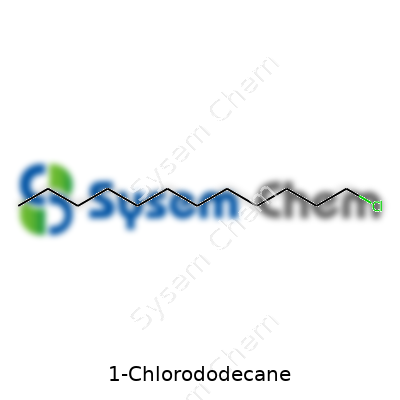
Most folks never consider how many unique molecules play a role in what we do every day. 1-Chlorododecane doesn’t stand out to most, but look into many industrial processes and you’ll find it shows up more often than you expect. The chemical formula, C12H25Cl, points to twelve carbons lined up in a chain, with one hydrogen replaced by chlorine. Stretch that carbon chain out, and you’ve got the backbone of many things you see in plastics, cleaning agents, or even lab research supplies.
Where Structure Meets Use
Every time a single atom swaps spots with another along a carbon chain, something new emerges. Here, chlorine sits at the start of the chain, attached to the first carbon. That's plenty enough to change the molecule’s behavior in various solvents, in reactions, and for manufacturers handling surfactants or specialty chemicals. Anyone in a lab who works with such compounds focuses on those small swaps. A single atom shift may sound minor, but it throws off the boiling point, the reactivity—sometimes even the usefulness—of a given substance.
1-Chlorododecane's Place in Industry
Chemical companies rely on molecules like 1-Chlorododecane because their properties keep processes running smoothly. Its formula, C12H25Cl, speaks to its length and reactivity. Long hydrocarbon chains with a chlorine attached fit perfectly into making lubricants and intermediates for other chemicals. Surfactants, detergents, and even agents for organic synthesis all call for building blocks just like this one. I've seen how one faulty batch caused headaches in a detergent plant—chemistry reaches right into day-to-day business, not just into textbooks or high-tech firms.
Safety and Environmental Considerations
Handling organochlorines, including 1-Chlorododecane, brings responsibilities. Chlorinated compounds have drawn fire for decades, due to their persistence in the environment and impacts on health if they're not managed right. Reports from the Environmental Protection Agency discourage careless disposal. Protective gear, proper containment, and trained personnel make all the difference in factories using such compounds—I've noticed firsthand that companies with a solid safety culture see fewer accidents or spills.
Making Better Choices with Chemistry
Consumers might not ever see or touch 1-Chlorododecane itself, but decisions upstream change the world downstream. Wastewater standards, careful sourcing, and advances in greener chemistry help limit the impact of organochlorines. The move toward less persistent, bioaccumulative molecules signals a shift in how chemists approach molecular design. A few years ago, I took part in a community cleanup around an industrial site—traces of earlier practices lingered long in local soils. Knowing chemical formulas means a bit more when you see their effects last for generations.
Looking Ahead
Pinpointing formulas like C12H25Cl helps students, scientists, regulators, and industry solve puzzles every day. Paying attention to these details doesn’t just end in the lab—it echoes into products, policy, and public health. As chemists look for stronger, safer alternatives and build new protocols, the lessons drawn from the likes of 1-Chlorododecane fuel continued improvement. Chemistry shapes our world, often in ways that sneak by unnoticed, but its impact remains real and measurable.
Getting Familiar With the Risks
1-Chlorododecane isn’t just another chemical gathering dust in a drum. It’s a liquid halogenated hydrocarbon, and those have a track record for needing extra respect. Exposure to vapors can irritate skin and eyes, and some folks working in labs have told stories about headaches or dizziness when the bottle gets left open, especially in stuffy rooms. This isn’t something to stash just anywhere—it calls for careful planning.
Creating a Solid Storage Plan
If you’ve worked in a lab or managed a chemical store, keeping materials in good shape takes real vigilance. The first rule always stands: keep 1-Chlorododecane in a spot away from direct sunlight and far from any heat source. Sunlight speeds up decomposition in a surprising number of chemicals, and heat ramps up vapor pressure that could stress out containers. That’s one reason to choose a cool room, ideally below 30°C. Cooler temperatures help it last longer and keep accidental releases rare.
Next, think about the container. Factory packaging usually arrives in tightly sealed drums, often built from high-density polyethylene or amber glass. Metal can react, so plastic or glass wins out. You don’t want a leak or a corroded cap, and always affix legible hazard labels—you’ll thank yourself when the fire inspector visits, or a new technician walks in. People ignore this step way too often, which can lead to costly mistakes.
Keep Air and Moisture Out
Most labs suffer from humidity at least part of the year. Leave a cap off, and water might sneak in. Moisture encourages decomposition, which can turn a routine job into a scramble. Using a desiccant, like silica gel, in storage cabinets soaks up stray water. Seal up containers between uses and avoid decanting into secondary bottles unless they’re properly cleaned and dry. It’s easy to skip this when you're in a rush, but a little extra care at the start saves headaches down the road.
Segregating Incompatibles
Every chemist has heard a story or two about chemicals causing a fuss after getting too close. 1-Chlorododecane doesn’t play nice with oxidizers or strong bases. Some people prepare a chart for common incompatibles and stick it on the wall—not pretty, but effective. Keeping it apart in a separate flammable liquids cabinet, away from other reactive or oxidizing agents, helps cut down the risk of a nasty reaction. Mixing mistakes can mean fires, so separation is critical.
Ventilation and Spill Readiness
Good airflow around storage areas means vapors don’t get trapped. If you’ve ever opened a poorly vented cabinet and caught a whiff of something sharp, you know it’s unpleasant and risky. Installing explosion-proof exhaust fans and regular HVAC checks keeps indoor air fresh. For those handling drums or transferring contents, spill kits, gloves, and goggles should be on hand at all times. Chemical splash goggles and nitrile gloves keep skin safe, and absorbent pads or neutralizing agents clean up any drips before they spread.
Training and Routine Checks
Real safety relies on habit and training. Teach every technician how to recognize worn containers and what to do in case of a spill. Store chemicals in a locked area so only trained personnel get access. Conduct regular visual checks—cracked bottles or sticky residues need fixing or replacing. Record these checks, as regulations often ask for documentation. Labs that don’t keep up with this recordkeeping always end up paying fines or wrangling with inspectors.
Storing 1-Chlorododecane safely isn’t complicated, but it does require focus. Anyone working with it should respect its properties and put these steps into practice. Secure storage means fewer accidents, healthier staff, and a lot less paperwork in the long run.
Understanding Chemical Calculations
Every lab worth its salt has a deep respect for numbers, especially molecular weights. In organic chemistry, this information isn't just a tidbit; it’s the backbone of careful measurement. Let’s talk about 1-chlorododecane. This molecule melds a twelve-carbon chain with a single chlorine atom at the end. Experienced chemists know: if the numbers are off, results turn unpredictable. Getting the molecular weight right means experiments follow through as planned, especially in synthesis or dosage calculations.
Now, 1-chlorododecane packs quite a punch in some routines. It draws interest for uses in surfactants, lubricants, and specialty chemicals. Calculating molecular weight by hand, it breaks down to 12 carbons, 25 hydrogens, and one chlorine. Here’s the rundown: carbon clocks in at 12.01 g/mol, hydrogen at 1.008 g/mol, chlorine at 35.45 g/mol. Tallying these up, 12*12.01 (for carbon) gives 144.12 g/mol, 25*1.008 (for hydrogen) gives 25.2 g/mol, and one chlorine rounds out the sum with 35.45 g/mol. Add them: 144.12 + 25.2 + 35.45. You land at 204.77 g/mol. No rounding errors, no surprises.
Why Precision Matters
In my research days, students sometimes mixed up compounds because they missed accurate weights. Suddenly, nothing matched the predictions. That’s not just a rookie mistake. Doctors, chemical plants, and research teams all lean on that same measurement for dosing and purity calculations. One decimal off and you could water down a batch or, worse, trigger unwanted side reactions.
Besides, scaling chemical reactions isn’t a guessing game. Professionals know how much material to feed into a reaction vessel because molecular weights set the pace. Overestimating the weight can wreck profit margins in industrial production or stress a reactor beyond its design. Precision keeps budgets in check and lets teams repeat results across batches or locations.
Learning from Chemical Catalogs
I trust only verified sources for this number. Sigma-Aldrich, for instance, lists the molecular weight for 1-chlorododecane at 204.77 g/mol, matching the calculation. Trusted data ensures labs worldwide stay on the same page. That’s not just neatness; it’s a safeguard for safety and consistency. Using trusted databases, labs dodge costly errors and maintain compliance for safety audits.
Paving the Way for Improved Practices
Many labs now lean on digital tools that check these numbers automatically, cutting down on human error. Yet, foundational skills remain core to scientific practice. Young chemists still need to understand why the weight matters, not just punch a formula into software. This is how science grows repeatable and safe.
If anything needs improvement, maybe materials companies could offer free online calculators and reference guides, updated to reflect the latest atomic weight revisions. These digital tools, paired with regular fact-checking, lay one more stone on the path to better research and safer industry practices.