1-Chlorooctane: Past, Present, and Future in Chemistry
Historical Development
Chemists have reached for 1-Chlorooctane since the early days of organic synthesis. Back in the late 19th century, researchers recognized the need for straight-chain haloalkanes as both laboratory reagents and chemical building blocks. Early methods often involved the reaction of alcohols with strong chlorinating agents. In the case of 1-Chlorooctane, classic approaches involved octanol and thionyl chloride—crude, but effective. Over time, industrial processes matured, aiming to cut down on hazardous by-products and tighten quality controls. As industry shifted toward more efficient options, fewer waste-heavy techniques hung around. Production ramped up in the post-war era when the plastics and surfactant industries boomed, leading to a stronger footprint for such alkyl halides in both research and industry.
Product Overview
1-Chlorooctane exists as a colorless to pale yellow liquid. Folks rely on it in organic labs, not just for the sake of making other chemicals, but as a stepping stone in drug discovery, and as an intermediate in synthesizing flavors, fragrances, and surface-active agents. In practical settings, it crops up in the testing of reaction mechanisms, where its predictable reactivity helps drive home lessons in nucleophilic substitution. Besides textbooks and blackboards, real-life manufacturers tap into its handy properties to tweak other molecules, lend an octyl chain, or introduce a chlorine atom with some predictability.
Physical & Chemical Properties
Molecular formula C8H17Cl places 1-Chlorooctane among the mid-length chain alkyl chlorides. It weighs in at an approximate molecular mass of 148.67 g/mol. Under the microscope and in the lab, its faintly sweet odor gives it away, alongside a boiling point that hovers around 180–185°C at atmospheric pressure. It floats on water, packing a density of roughly 0.88 g/cm³ at 25°C. You get low solubility in water but much higher solubility in most organic solvents, including ether, chloroform, and various aromatic hydrocarbons. Chemically, the polar carbon-chlorine bond draws attention, making the compound prone to substitutions and eliminations—a cornerstone for round after round of chemical creativity.
Technical Specifications & Labeling
Strict labeling keeps things safe and consistent. A standard bottle lists the CAS number (111-85-3), structural formula, manufacturer name, intended industrial or laboratory use, purity (often above 98%), storage instructions, and hazard pictograms. Every detail counts, especially when handling volatile or hazardous reagents, and professional suppliers include certificates of analysis to certify key specs like GC purity, water content, and residual solvents. Regulatory requirements dictate hazard screening, so containers arrive with warnings about environmental impact and possible health risks.
Preparation Method
The most common route for 1-Chlorooctane follows an old but trusty formula: you start with 1-octanol. Combining it with thionyl chloride or phosphorus trichloride, you get a clean conversion to the alkyl chloride. Some modern setups use hydrochloric acid and a dehydration catalyst to avoid sulfur-based waste, especially where scale and environmental control matter. The reaction demands attention—dry glassware, controlled addition, and a good fume hood go a long way. The crude product gets cleaned up by distillation. Experienced chemists avoid overheating to cut down on side products, especially with delicate molecules in the mix. Skilled operators keep yields high and residues low, crucial for safety and cost.
Chemical Reactions & Modifications
The reactive chloride in 1-Chlorooctane acts as a springboard for other transformations. Nucleophilic substitution stands front and center—in research labs, chemists swap out chloro for amino, hydroxyl, or cyano groups. Pharmas rely on such reactions to tack tailored groups onto an octyl scaffold, aiming for better solubility or biological effect. Grignard reactions, where 1-Chlorooctane reacts with magnesium in dry ether to create octylmagnesium chloride, open doors for more advanced organometallic syntheses. Eliminations, typically via strong base, crank out 1-octene as an industrial feedstock. Each pathway brings opportunities, but every step calls for handling toxic intermediates, so robust ventilation and monitoring practices stay front of mind.
Synonyms & Product Names
Call it what you will—1-Chlorooctane, n-Octyl chloride, Octyl chloride, or 1-chloro-n-octane—they all point to the same molecule. In catalogs or research papers, other names show up, including Chloroctane or monochlorooctane. International suppliers sometimes list translations, which keeps communication clear in the global chemical trade.
Safety & Operational Standards
Long experience in university labs and production plants drives home a message: treat alkyl chlorides with respect. 1-Chlorooctane can irritate the skin and eyes, and inhaling its vapors proves hazardous. Operators rely on gloves, goggles, and fume hoods. Manufacturer safety data sheets flag the risks—combustibility, volatility, and environmental harm. Strict protocols around transport and storage stem from lessons learned the hard way: keep the material cool and away from ignition sources, and stow it under nitrogen or another inert gas for longer-term storage. Disposal gets careful attention: residues can’t head down the drain but must leave in hazardous waste containers bound for incineration.
Application Area
1-Chlorooctane’s reach goes deeper than many realize. Producers of pharmaceuticals, especially antihistamines and anesthetics, appreciate its role as a chain-extending agent. Fragrance developers lean on the molecule as a backbone for surfactant and flavor molecules, delivering both volatility and hydrophobicity. In agrochemical synthesis, the even, unbranched octyl chain punches up activity and bioavailability. Oilfield services have used it as a phase transfer catalyst precursor. Paint and plastics manufacturers use these alkyl halides to modify surface characteristics and texture, shaping the performance and finish of finished goods.
Research & Development
Laboratories still find 1-Chlorooctane indispensable as a model substrate for new catalysts and green chemistry reactions. Work at the academic frontiers often asks: can new protocols avoid hazardous chlorinating agents and reduce waste? These projects often include phase-transfer catalysis, ionic liquids, and enzyme-mediated methods aiming for better selectivity under gentler conditions. As the chemical industry continues its environmental reckoning, more grant funding aims at benign synthesis and renewable feedstocks, with 1-Chlorooctane frequently riding along as a test case. Rapid screening techniques in medicinal chemistry experiments rely on halogenated intermediates to evaluate reaction scope, speed, and yield.
Toxicity Research
Decades of animal and cell culture studies reveal the potential health risks lurking behind repeated exposure to chlorinated alkanes like 1-Chlorooctane. The molecule stands out for its moderate acute toxicity—enough to command extra care, even in trace quantities. Its breakdown in soil and water produces persistent residues, sometimes with higher environmental risk than the parent compound. The development of modern bioassays and computational toxicology tools pushes the research beyond simple LD50 numbers, tracking metabolites and their possible bioaccumulation. Regulatory agencies, including the EPA and REACH in Europe, revisit exposure limits periodically, as new research emerges.
Future Prospects
1-Chlorooctane’s future will hinge on the industry’s appetite for greener synthesis and its ability to harness this molecule’s versatility while shrinking its environmental footprint. Pushes toward closed-loop manufacturing, digital inventory tracking, and reformed waste practices may soon become standard. Synthetic biology approaches may also drive a quiet revolution in how alkyl chlorides like this one come to be, replacing traditional halogenation with enzyme-driven pathways. As markets demand more sustainable surfactants, pharmaceutical intermediates, and specialty chemicals, 1-Chlorooctane may show up through novel, less hazardous pipelines, ideally with more robust risk management and worker protection baked in from the ground up.
What's Behind the Name?
The name 1-chlorooctane doesn’t jump out at most people outside a lab, but it shows up in places where precision and reliability matter. This chemical, basically an eight-carbon chain with chlorine at the start, has become a key player in more than one industrial setting.
Uses in Everyday Manufacturing
Talking to colleagues in production or working through safety data sheets, you bump into 1-chlorooctane as a solvent and as a building block for other chemicals. Manufacturers turn to it because it pulls off reactions that other chemicals won’t do as cleanly. For example, it helps in making surfactants—those ingredients behind things like detergents and shampoos. Surfactants let oil and water mix, keeping sinks and clothes clean. Chlorinated alkanes form the backbone of these cleaning products.
Pharmaceutical chemists also rely on 1-chlorooctane in syntheses. Its straight carbon chain and reactive chlorine group allow it to shape molecular structures. In some cases, these tiny tweaks make medicines more effective or help them break down more safely in the body and environment. Of course, one bottle of 1-chlorooctane never pops up in the average pharmacy, but it plays a quiet, supporting role.
Insights from Lab Experience
During lab work in graduate school, it was easy to overlook 1-chlorooctane at first. Students fixate on the “big name” reactions, but projects often needed a specific intermediate, and that’s where 1-chlorooctane came in. Its chain and single chlorine atom made it useful as a base for further chemical modification. Reactions ran efficiently and the results stayed predictable, which cut down troubleshooting and waste.
More than once, scrambling for a quicker or safer route to the right molecule, we circled back to 1-chlorooctane. The purity and straightforward handling helped reactions finish cleaner. Lab safety required careful storage and good ventilation because chlorinated solvents can carry some health risk if misused.
Safety and Environmental Impact
With all the practical advantages, 1-chlorooctane isn’t risk-free. Chemists wear gloves, goggles, and often work under a hood when using it. Mismanaging disposal, like tipping it down a drain, pollutes water and harms wildlife. Waste plants struggle to break down these chlorinated chemicals quickly, and the chlorine atom keeps 1-chlorooctane persistent in soil and groundwater. Long-term, unchecked pollution invites health risks and legal headaches. Regions with strict environmental controls demand careful tracking of even small leaks or spills.
Aim for Responsible Use
To reduce risks, companies invest in waste capture and recycling systems. Training staff to handle and store 1-chlorooctane safely and pushing research for greener alternatives helps protect workers and neighborhoods. Using smaller quantities, recycling chemicals where tools make it possible, or switching out for less persistent molecules where science allows—these steps make manufacturing safer.
More people outside the chemical world don’t know 1-chlorooctane exists, even though it supports products that reach nearly every home. Understanding where it fits, including the need for strong safety standards, shapes responsible manufacturing and chemical stewardship.
A Look at 1-Chlorooctane’s Structure
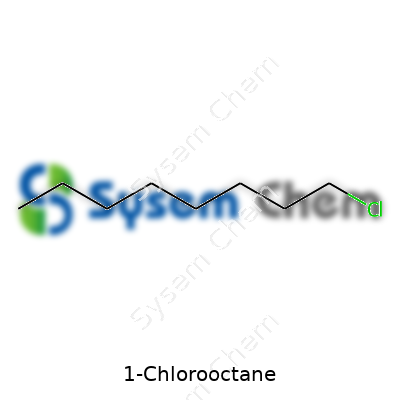
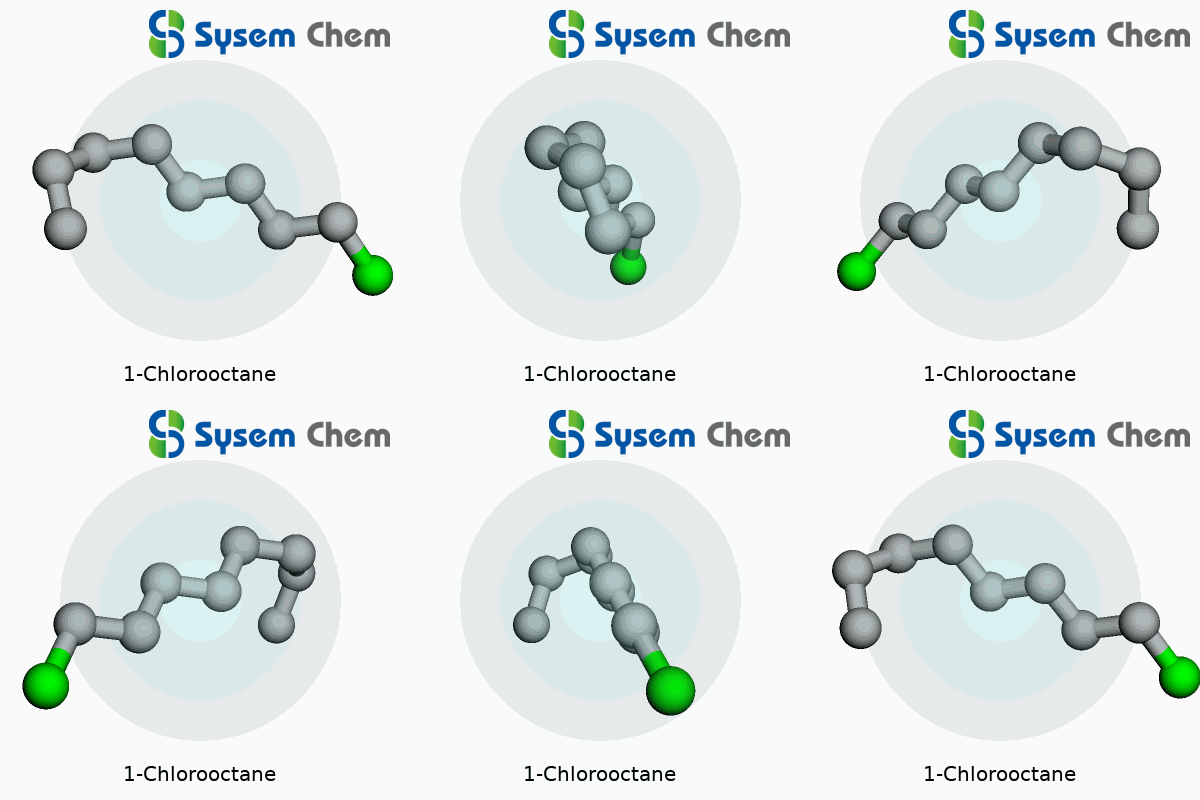
1-Chlorooctane carries the chemical formula C8H17Cl. It’s one carbon chain with eight carbon atoms, but what sets it apart is the single chlorine atom attached to the first carbon. Understanding how that structure works goes beyond rote memorization. For anyone who’s worked in a lab, small variations in structure open the door to big changes in function, toxicity, and handling. As a kid who split time between chemistry sets and garage workbenches, I learned fast that a single atom placed differently makes all the difference.
The straight-chain octane backbone is nothing more than a hydrocarbon that’s fairly familiar to anyone who’s ever pumped gasoline. Once you swap out a hydrogen for a chlorine, you get 1-Chlorooctane. That single chlorine atom changes reactivity, and the way the compound mixes with other substances—essentials for chemists who want to make new materials, test pharmaceuticals, or just troubleshoot when a reaction isn’t working as planned.
Why This Formula Matters
This isn’t just about scribbling down numbers and letters for a quiz. 1-Chlorooctane’s C8H17Cl formula delivers a fingerprint for chemists and researchers. If you’re in pharmaceuticals, agrochemistry, or material science, grasping what that formula means can save time, money, and sometimes, safety. Chlorinated alkanes like this one are used as solvents, intermediates, and sometimes as controlled starting points for more complex molecules.
Experience tells me that just reading “octane” or “chlorine” doesn’t drive home safety risks. For example, add chlorine into the mix, and you’re suddenly dealing with questions about reactivity you didn't have to think about with pure octane. Chlorinated compounds raise environmental and health concerns, especially for folks working in confined spaces or near open water. 1-Chlorooctane isn’t the most notorious in its family, but regulation is always tightening, and the formula flags its place on the watchlist.
Facing the Challenges
Work with any chlorinated hydrocarbon, and you’re staring at two realities. One, they’re useful. Two, they create waste tough to dispose of safely. I’ve seen cleanup jobs on old properties lag years behind, and it always starts with someone underestimating the reach of these chemicals. That formula C8H17Cl marks a compound persistent in soil and water, so proper handling matters from the minute it leaves the drum.
Solutions need to come from two directions: better process controls to limit accidental leaks and continued development of “greener” chemicals that break down faster in the environment. Students coming up through chemistry classrooms often want to skip to the excitement of new discoveries, but real innovation in this space starts with a deep respect for these formulas and the problems they can cause if forgotten.
Keeping an Eye on the Formula
C8H17Cl isn’t just an answer for a test. It’s a reminder that every combination of atoms deserves attention. For me, seeing this formula takes me right back to the training lab: careful pipetting, sharp smells, and a healthy respect for what a single letter can mean. Skipping those lessons leads to mistakes, so let’s keep formulas familiar—for new scientists, for safety professionals, and for every community that trusts the science in their water and air.
Everyday Chemicals, Real Risks
Most folks rarely think about compounds like 1-chlorooctane, but this colorless liquid lands in more workplaces than it does in news headlines. Tucked away in labs and found in some chemical manufacturing, people encounter it in real life—sometimes without knowing it. Government agencies list it as a hazardous substance, which should raise eyebrows. The catch is, while many chemicals look harmless in small amounts, toxic effects often build quietly. It’s easy to brush off risks until something goes wrong.
What We Know About Toxicity
Peer-reviewed studies have measured 1-chlorooctane’s effects on living tissue. Workers exposed to it for short periods sometimes report symptoms like headaches, nausea, and dizziness. Skin contact leads to irritation. If swallowed or inhaled at high enough doses, this chemical can trigger more serious trouble—think respiratory difficulties and kidney or liver strain. Some lab tests on rodents suggest possible links to long-term organ damage with repeated high exposures.
The U.S. Environmental Protection Agency includes 1-chlorooctane in its hazardous air pollutants list. European agencies assign precautionary codes, urging careful storage and handling. In practice, short bursts of exposure probably don’t cause long-term health crises for most adults, but that doesn’t mean risks should be shrugged off. Many known carcinogens started off as “probably safe” until the evidence shifted.
Personal Perspective
Years working around solvents taught me a hard lesson: shortcuts catch up. During my time in a lab, even tracing paper towels soaked with these compounds made my throat burn if I skipped the gloves. That might seem minor. After all, not every headache means disaster. But take those moments over months, especially without proper gear or ventilation, and small problems add up. Friends who worked in old factories often tell stories about inhaling chemical vapors and feeling lousy for days. Most eventually quit or switched jobs because their health declined. These are not just statistics—they’re people dealing with the effect of ignoring a label.
Addressing the Problem
Companies using 1-chlorooctane can’t just tape up warning signs. Training, proper air flow, and solid personal protective gear matter at every step. Daily routines work better when glove policies and spills get taken seriously. Even one mistake can leave someone paying the price for years afterwards. Keeping accurate safety data sheets easily available makes a difference, but leadership has to walk the talk, not just check a box for compliance.
At home, curiosity sometimes leads folks to tracking down everything in cleaning products and solvents. Manufacturers rarely list every ingredient, yet many chlorinated solvents slip into household items. Smart consumers push for transparency and safer substitutes—many companies have switched to less hazardous chemicals because of this pressure.
The Stakes Are Real
Ignoring hazards usually lands people in trouble slowly. Earliest clues get brushed off as bad air or allergies, until someone ends up in urgent care or worse. 1-chlorooctane may not grab headlines, but staying informed and cautious shapes how safe a workplace or home can be. If someone spots it on a label or in a storeroom, respecting its risks keeps everyone healthier in the long run.
Understanding the Basics
1-Chlorooctane goes by other names like octyl chloride, but the structure tells the story: a chain of eight carbon atoms with a chlorine atom replacing one hydrogen at the end. A lot of folks end up working around this compound in college labs or in industry, so getting a grip on its physical properties gives some real advantages. I've handled this liquid in research, and certain details always stick out—how it pours, its odor, and how it behaves next to more common alkanes.
Boiling and Melting Point: What They Mean in Practice
Preparing for experiments, checking the boiling point signals how the substance handles the heat. 1-Chlorooctane boils around 207 to 209 °C (that's 405–408 °F, which is not exactly low). This boiling point comes from the added heft of a chlorine atom; compared to plain old octane, that halogen brings strong intermolecular forces into the mix. So, if you’re thinking about distilling it or separating it from a blend, expect it to need a chunk of energy.
Melting point is another box to check. 1-Chlorooctane freezes at about -56 °C. Most folks never deal with temperatures that low outside the lab, but knowing that it's a liquid at standard room temperatures tells you roughly what storage and handling should look like—no need for anything special beyond tightly closed bottles and a cool, ventilated spot.
What Else Stands Out?
Color comes up in every inventory note—1-Chlorooctane shows up as a colorless liquid. That means no easy color cue for contamination or aging, so smell and clarity often draw more attention from workers. Its odor is faint but noticeable, typical for chlorinated hydrocarbons. If you’re used to working with standard solvents, the scent isn’t harsh but reminds you there’s chlorine in the chain.
Weight per volume is a practical concern. The density measures about 0.877 grams per cubic centimeter at 20 °C. Pour it out, and you notice it settles a bit heavier than water but floats over denser solvents. This matters for layering liquids or setting up separation funnels—a small but handy insight, especially for students learning extraction.
On top of that, 1-Chlorooctane isn’t eager to blend with water, but it mixes smoothly with common organic solvents. That makes sense; most alkyl chlorides stay nonpolar enough to resist water, but dissolve right into ether or alcohol. This single trait defines its behavior in bench-top synthesis or industrial blending.
Assessing Risks and Proper Use
Long experience in teaching labs drives home safety points. Any liquid hydrocarbon with chlorine throws up warning signs. Chlorinated organics can irritate skin and lungs, require good gloves, and call for plenty of ventilation. 1-Chlorooctane isn’t the worst in terms of acute toxicity, but never shrug off the long-term risks—chlorinated solvents can hang around in the body and environment.
Waste disposal also raises heads in industry and academia. Organic halides don’t break down easily. Keeping them out of sewers means following local regulations and sending them out to approved incinerators.
This substance offers useful reactivity for chemists, showing up in synthesis work and as an intermediate. Reliable data on its properties makes handling safer, waste separation easier, and experiments more predictable. Knowing what makes 1-Chlorooctane tick, from boiling point to density, guides new users to treat it with respect and keeps accidents rare, not just on paper but in reality.
What Makes 1-Chlorooctane a Challenge in the Workplace?
1-Chlorooctane feels innocent enough on paper. Colorless, almost odorless, it blends right in with dozens of industrial chemicals lining any storeroom shelf. I worked in a lab where complacency created avoidable risks. Some coworkers thought keeping 1-Chlorooctane next to regular solvents posed little risk. On one rushed Monday morning, a spill reminded everyone why this chemical deserves more respect.
Chlorinated compounds carry a reputation for sneaky hazards—mainly inhalation and skin contact. 1-Chlorooctane irritates the eyes, nose, and respiratory system. Some research points to possible liver and nervous system effects with repeated exposure. Mistakes come easy if you treat it like standard cleaning solvents or store it in rusty, cracked containers. Accidents in one moment can leave lasting health problems.
Safe Storage Starts with the Right Location
During safety training, our instructor walked straight to the storeroom’s farthest corner—free from heat, direct sunlight, and busy foot traffic. That corner gets the nod for storing chemicals like 1-Chlorooctane. Choose a cool, well-ventilated location. Lock chemicals away from all ignition sources and incompatible substances like strong oxidizers. Every chemical supplier includes this warning, and for good reason. I once saw a cabinet near a steam pipe. Hot temperatures changed the pressure in bottles, making leaks more likely. Even a small release fills a room with dangerous fumes.
Don’t stick with soft plastic or makeshift containers. Stick to tightly sealed glass or specialized chemical-resistant bottles. Label every container with product name, hazard warnings, and date received. It sounds basic, but missing or faded labels become frequent hazards. Without clear labeling, emergency responders can’t do their work if there’s a spill.
Safe Handling: Personal Habits That Matter
Goggles, nitrile gloves, and lab coats sit right next to the chemical in most proper labs, but not everyone uses full protection every time. From my experience, nothing beats a safety habit formed by hands-on drills. Fume hoods handle vapors well. I’ve seen folks try shortcuts, like pouring directly from large drums, which never ends well. Smaller transfer bottles limit spills and splashes and save a lot of headaches.
Eating or drinking in chemical handling zones always spells trouble, yet old habits die hard. Every training session should remind staff to wash their hands—the simplest step, often ignored. Avoid touching your phone or personal items while working. One fingerprint loaded with 1-Chlorooctane residue contaminates more surfaces than you’d think.
Improving Safety with Smart Practices
Safety rarely stays static. Companies should set up regular checks for leaks, degradation, and expired chemicals. I’ve seen a sharp improvement after monthly inspections. If something feels off, report it fast. Use spill kits nearby—not across the building. Emergency eyewash stations and showers belong close to workspaces, not buried in hallways.
Training goes beyond watching a video. Drills build muscle memory. Showing team members how to clean a spill or handle a small exposure helps more than any manual. If management supports constant education and practical refreshers, fewer mistakes make it past the first line of defense.
Better Storage and Handling Protects Everyone
Safe storage and handling of 1-Chlorooctane hinge on the habits and vigilance of every team member. Real commitment lowers the risks—not just on paper, but every day after work is done. Each step, from proper labeling to the right protective wear, makes a difference. It doesn’t just follow regulations; it keeps people healthy and businesses operating smoothly.