1-Chlorotetradecane: Tracing Its Role from Early Discovery to Future Potential
Historical Development
From the early days of organic synthesis, chemists have chased after ways to tweak simple hydrocarbons into novel compounds. Chlorinated alkanes came to the scene as both curiosity and practical building blocks. In the mid-20th century, as labs gained access to better reagents and glassware, researchers began to describe longer-chain chloroalkanes like 1-chlorotetradecane with more confidence and purpose. I remember thumbing through yellowed chemical catalogs from that era where monochlorinated paraffins suddenly started appearing for industrial oils, surfactants, and synthetic intermediates. Unlike their shorter counterparts, these C14 chlorinated alkanes didn't just fill out a chemical series—they opened doors to new technologies in plastics, lubricants, and specialty surfactants. The wider availability of this compound marked a shift, linking petrochemical resources with specialty chemicals right in the laboratory workflow and, soon after, at pilot scale.
Product Overview
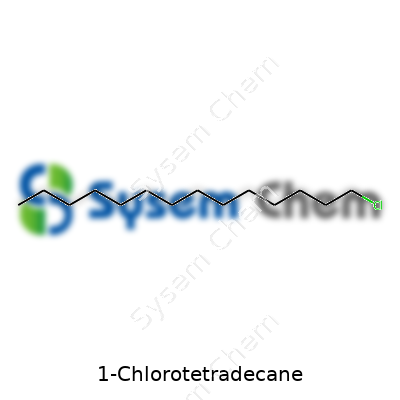
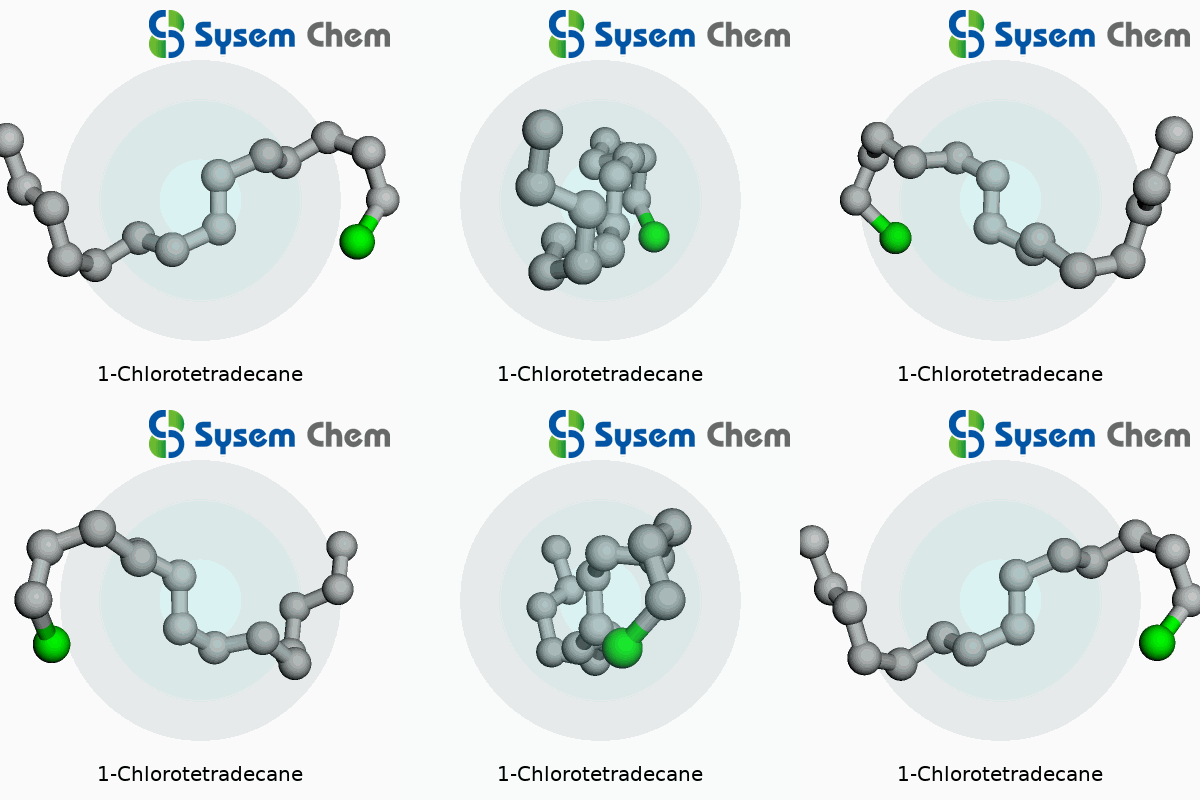
1-Chlorotetradecane isn’t just another entry in a long list of hydrocarbons. Here’s a molecule that often slips under the radar in conversations about surfactant backbones and fluid additives. Its formula, C14H29Cl, betrays a fairly straightforward structure—tetradecane’s long, even hydrocarbon skeleton with a chlorine atom taking the primary spot. For suppliers and end users, that matters. This compound lands in bottles not as a byproduct, but through targeted synthesis, with manufacturers zeroing in on specific chain lengths to meet technical requirements for downstream chemistry. Whether it shows up on an MSDS sheet as monochlorotetradecane, 1-chloromyristane, or n-tetradecyl chloride, the function stays the same: serving as a controlled, reactive chain starter for a host of specialties.
Physical & Chemical Properties
Pour some 1-chlorotetradecane, and you’re met with a colorless liquid that flows readily at room temperature. It boils just above 290°C, while the melting point sits a notch below ambient—solid if you leave it in a cold room, liquid on most lab benches. The smell tips off its alkyl chloride nature, never overwhelming but distinct enough to remind you of simple organic chemistry labs. Its density drifts around 0.86 g/cm³, typical of chlorinated hydrocarbons in this chain length. Solubility leans toward organics—think ether or chloroform—for obvious reasons. That long carbon chain doesn’t play nice with water. Chemically, the carbon-chlorine bond at the end of the chain gives a reliable point for nucleophilic substitution, acid chloride preparation, and even Grignard-like additions if folks know what they’re doing.
Technical Specifications & Labeling
Buy a drum of industrial-grade 1-chlorotetradecane, and the label usually spells out at least 98% purity, though research packages sometimes notch up to 99%. Impurities sneak in as shorter or longer chained chlorides, plus traces of unreacted tetradecane and side products from halogenation. Safety data sheets flag it under standard UN and GHS codes, tying up transport classification as a combustible liquid and moderate irritant. On the technical spec sheet, you find GC analysis for chain length distribution, refractive index, and sometimes even residual chloride titration. I’ve seen buyers request tailor-cut purity for pharmaceutical precursors or surfactant research, though most process users want robust and consistent supplies over absolute chemical perfection.
Preparation Method
For most makers, chlorinating pure tetradecane offers the cleanest path to 1-chlorotetradecane. Anhydrous hydrogen chloride gas goes nowhere; what you want is chlorine under UV or with careful thermal control, driving substitution directly at the terminal carbon. I’ve run small-batch syntheses where PCl3 or SOCl2 deliver decent yields, but those routes need strong controls, plenty of venting, and careful quenching. Industrial producers lean on continuous flow reactors or stirred tanks with good mixing and phase transfer catalysts. Washing out side products, neutralizing residual acids, and vacuum distillation make up the end stage, with any hiccups at scale showing up in off-spec batches.
Chemical Reactions & Modifications
In real-world synthetic routes, 1-chlorotetradecane’s terminal chloride swaps partners willingly; nucleophiles displace the chlorine, stacking up opportunities for ether, thioether, and amine substitution. Laboratories often flip this precursor into myristyl alcohol using mild reduction—think lithium aluminum hydride or catalytic hydrogenation. Olefin formation sits one elimination step away, yielding tetradecene for specialty lubricants and surfactant blends. Sulfonation and quaternization appeal to surfactant chemists, letting them create cationics or extend into zwitterionics by clever functional group additions at the chain end. Derivatization remains a staple for material scientists hunting for surface modifiers or charge carriers in new composites.
Synonyms & Product Names
Depending on the source and market, you’ll find 1-chlorotetradecane sold as monochlorotetradecane, tetradecyl chloride, n-tetradecyl chloride, or 1-chloromyristane. CAS number 112-68-5 ends search confusion, especially for regulatory disclosure. MSDS references stick to the IUPAC name, but I’ve noticed suppliers sometimes use trade names or cross-market with surfactant blends. On bulk order sheets in the chemical industry, shorthand abbreviations take root, like C14Cl or C14 alkyl chloride, reflecting the need for speed and clarity in procurement and regulatory submission.
Safety & Operational Standards
Safety comes front and center. Organic chlorides like 1-chlorotetradecane require chemical goggles, nitrile gloves, and fume hoods in any hands-on scenario. Skin contact causes moderate irritation for most lab staff, and inhaling vapor overexposes users to headaches and throat discomfort. Over the years, regulatory bodies have outlined storage in cool, well-ventilated areas, with flammable liquid signage and routine leak checks on seals and valves. Disposal guidelines call for incineration in permitted facilities, steering clear of environmental discharge. I’ve learned that keeping safety training current cuts accident rates sharply; newcomers quickly respect what even “low-toxicity” organic chlorides can do in the wrong hands.
Application Area
1-Chlorotetradecane slots naturally into two major sectors: specialty surfactant production and intermediate synthesis for industrial chemicals. In surfactant work, the C14 tail offers ideal hydrophobic length for detergents, antistatics, and emulsifiers, showing strong performances in both consumer products and technical fluids. In lubricants and greases, it takes up roles as a chain extender or viscosity modifier, often after transformation into alcohols or acids. I’ve seen pharma pilot plants use it to introduce long alkyl chains into drug candidates for targeted drug delivery or prodrug strategies. Polymer manufacturers grab these molecules as functional finishes—sometimes for textile water repellency, other times for antistatic coatings or low-friction films. In recent years, research teams have screened chlorotetradecane derivatives as biocides and lubricity agents in oil recovery and drilling fluids.
Research & Development
Current research leans heavily toward green chemistry in the modification of chlorotetradecane. Enzymatic transformation and mild catalytic systems target lower environmental impacts. The shift away from harsher chlorination or reduction protocols answers new regulations on halogen content in consumer goods. Advanced analytical tools map impurity profiles down to trace levels, opening up fresh ways to certify material clean enough for cosmetics or food-grade applications. In my own experience, collaborations between surfactant researchers and polymer producers force every team to rethink starting materials, and the demand for documentation and traceability on every batch has never been higher.
Toxicity Research
Over the decades, toxicity studies have tested chlorinated alkanes for bioaccumulation, skin absorption, and acute inhalation risk. For 1-chlorotetradecane, rodent studies show limited acute toxicity, with no major bioaccumulation in tissue but clear irritancy on repeated skin contact. Environmental fate assessments note slow breakdown under aerobic conditions, giving environmental chemists more to ponder about wastewater treatment and process emissions. Regulatory standards preclude its direct use in food or personal care without downstream transformation or proven dechlorination. Modern toxicology puts extra weight on mixture effects; additive risk with other halogenated organics deserves more study.
Future Prospects
The future promises bigger challenges and ambitions for 1-chlorotetradecane. Industry faces mounting pressure to source cleaner, renewable feedstocks and to curb organochlorine releases. Biosynthetic routes—potentially using engineered microbes or biotransformation of plant-based tetradecane—sit just over the horizon for high-value applications. For now, fluorine and bromine analogues tempt some developers, yet the price and safety balance holds many companies to chlorine-based chemistry. Regulatory hurdles push for real-time emissions tracking, product lifecycle analysis, and alternatives assessment, turning once-niche chemicals like 1-chlorotetradecane into case studies for chemical sustainability. At the intersection of industry and research, only those who invest in both greener syntheses and smart downstream applications will keep this compound relevant in tomorrow’s specialty markets.
From Chemistry Labs to Everyday Products
Most people walk through their daily routines never hearing about 1-chlorotetradecane. Still, this chemical finds its way into industries that touch nearly everyone. It’s a type of chlorinated paraffin, made from the long-chain hydrocarbon tetradecane with an added chlorine atom. Not flashy or heavily marketed, it quietly supports manufacturing and science in more ways than one would expect.
Solvents and Cleaning
Firms that manufacture industrial cleansers often turn to 1-chlorotetradecane for its strong solvency. Paint strippers, degreasers, and cleaning blends harness compounds like this to break down oils, wax and other hydrophobic residues. Chlorinated solvents cut through grime that water or basic detergents simply can’t touch. Factories, car garages and some household products benefit from its grit, though handling comes with safety protocols due to potential toxicity and environmental buildup.
Specialty Lubricants
In precision machinery—think about gearboxes or metal stamping—the right lubricant means everything. Engineers sometimes seek out chlorinated hydrocarbons like this one because it can stick to metal under high pressure and work as an extreme pressure additive. While mineral and synthetic oils have their place, 1-chlorotetradecane and similar molecules can handle loads that push other chemicals to their limits. That’s one of the reasons specialty lubricant formulas sometimes feature this compound, especially where heat and friction run high.
Intermediate in Synthesis
In organic chemistry, certain reactions need a reliable source of alkyl or chloroalkyl groups. 1-Chlorotetradecane acts as a building block for scientists working on surfactants, pesticides, plasticizers, and specialty polymers. Lab work often calls for unique carbon chains, and this chemical provides that structure for more complex molecules. It doesn’t always get recognition in the finished product, but its presence in the supply chain matters. Its role stretches from the bench top to industrial reactors producing new materials.
Concerns, Risks, and Safer Practices
The same chlorine that gives 1-chlorotetradecane its useful properties also raises concerns. Chlorinated hydrocarbons can persist in the environment. They may find their way into waterways if disposal isn’t carefully managed. Some have links to health risks, especially after long or repeated exposure. Regulations restrict their use in certain products, particularly in home cleaners or food-related applications. Industry shifts to greener solvents and alternative additives keep gaining ground, but the full replacement of this group of chemicals takes time, research, and money.
People who mix chemicals or run workshops know the importance of protective equipment, good ventilation, and strict disposal rules. Training and oversight play big roles. As new alternatives emerge, it pays to keep track of innovations in both chemistry and safety. Sustainability goals push companies to examine their options more closely, weighing the performance benefits of compounds like 1-chlorotetradecane against their long-term impact. Experience shows that clear rules and consistent enforcement, paired with ongoing research into more biodegradable and less hazardous options, help protect workers and the world outside the lab or factory.
Why Pay Attention to Handling Practices?
Spending time in research labs, I’ve come across my share of chemicals that don’t look threatening on paper. 1-Chlorotetradecane falls in that category—a clear, oily liquid tucked away among bottles with far scarier warning labels. Still, its safety sheet carries serious points that demand respect. This compound isn’t one to toss around without care, and I’ve seen corners cut for convenience result in a headache nobody wants.
Respecting the Risks
1-Chlorotetradecane can cause harmful effects after skin contact, breathing the vapors, or splashing into the eyes. Prolonged exposure may leave you with irritation that lingers hours later. The main trouble stems from the way these chlorinated hydrocarbons interact with tissues. Some people think “not instantly caustic” means no need for extra steps. That’s a shortcut you feel in your hands after even a small splash. Health agencies and chemical suppliers in the United States and Europe list clear risks related to eye and skin exposure. Inhaling vapors won’t knock you out instantly, but over time, lung troubles pop up. Long-term studies on human toxicity might still leave gaps, but the way these chemicals have acted in animals and cell studies gives enough reason to cut out careless handling.
Simple Steps That Make the Difference
Good gloves keep trouble off your skin. I favor nitrile or neoprene when working with organochlorides. Those dollar-store latex gloves tear just brushing up against a beaker, so stick with the sturdy stuff. Lab goggles make a difference—standard prescription glasses leave skin at the edges exposed. Since the fumes offend your throat, work in a fume hood or at least with strong room ventilation pulling vapors away.
Clean work clothes matter. Years ago, I saw someone try to wipe up a small spill using a bare hand and then scratch their face. No surprise: redness appeared in a little under a minute. If there’s any splash, wash it off with soap and water, not just a wet towel. Keep handwashing stations nearby—don’t just trust gloves to save you.
Smart Storage and Spills
Treat storage with respect. Tightly sealed bottles live away from heat sources—so not next to radiators or sunny windows. Plenty of accidents start from rushing to finish a task and leaving bottles unsealed. I keep spill kits close, including absorbent pads and neutralizer powder. Know your kit before you need it. Paper towels won’t cut it for this stuff.
Struggling to open bottles with slippery gloves can tempt people to clamp containers with their teeth. I’ve watched it almost happen. Don’t improvise—ask for tools, not shortcuts.
Training and Teamwork
Safety rules aren’t suggestions; they’re lessons learned from real-life accidents. Whether you have a team of ten or you’re alone in a small lab, reviewing procedures together catches the mistakes you miss solo. Walk new folks through the steps, even if they say they’ve “done this before.” Keep updated with safety data sheets from reliable sources like the European Chemicals Agency or OSHA. I bookmark these for reference, just in case.
Reporting near-misses can sometimes feel like extra paperwork, but each story helps keep others safe. My lab once overhauled its safety routine after a minor skin exposure sent someone home early—that shook us out of our bad habits more than a poster ever did.
Moving Forward With Confidence
Staying safe around 1-chlorotetradecane isn’t about paranoia, just steady habits. Take some basic measures to protect your body, your co-workers, and your peace of mind. Lab work asks for focus, not fear.
Understanding the Basics: What 1-Chlorotetradecane Represents
From high school labs to chemical research facilities, the names and formulas of compounds often hint at practical realities. 1-Chlorotetradecane might not sound familiar at the supermarket, but for chemists, its structure says a lot. It’s an alkyl halide—tetradecane with one chlorine swapped onto the chain’s first carbon. Its chemical formula is C14H29Cl. That formula hints at fourteen carbon atoms lined up in a row, with chlorine claiming a spot at one end. Learning to read formulas like this helps break down unfamiliar names and connect with real-world applications.
Real Uses: Far Beyond the Textbook
In the working world, compounds like 1-Chlorotetradecane show up in far-reaching corners. I remember cleaning out storage in an old lab and finding a bottle labeled ‘Alkyl Chlorides.’ At the time, labels like that felt abstract, but now I see these chemicals drive a ton of real tools. Lubricants, detergents, and specialty solvents sometimes trace back to these long carbon chains. By understanding these formulas, workers handle these liquids without stumbling through guesswork.
Safety sits near the top of the list for many chemists and transport workers. 1-Chlorotetradecane has a chlorine atom that can interact with other substances more actively than an unaltered alkane. Knowing what the chemical formula means changes how people store and move such compounds. The chlorine brings up concerns around how the compound might break down or form byproducts. Clarifying the formula doesn’t just serve theory—it factors into transport regulations, storage spacing, and emergency protocols.
Why Accuracy Matters: Beyond the Obvious
Some might say most people will never touch 1-Chlorotetradecane, but mistakes in understanding formulas show up in unexpected places. I heard about one mix-up in a blending operation where the wrong type of alkyl chloride ended up in an industrial batch. It cost countless hours to clean up and caused headaches across the team. Accurate formulas cut down the odds of that kind of mishap. C14H29Cl isn’t just a sequence of letters and numbers—it spells out a distinctive balance of reactivity and handling needs.
Risk Reduction: The Human Element
Jobs working with chemicals have stretched from small town water treatment plants to international shipping containers. Whenever a formula gets overlooked, someone somewhere pays the price. Staff should have clear, simple references, and regular training built around real-life examples. Posting up reminders of key formulas, especially for compounds used frequently, makes a real difference in avoiding costly confusion. Whether prepping for lab work or sending a shipment down the highway, understanding these details can mean catching something that would slip through an automated list or software.
Practical Solutions and Moving Forward
Encouraging a mindset that treats even simple formulas with respect could help entire industries lower risk. Regularly reviewing what each component does, and why its formula matters, sends a message that every bottle and barrel deserves proper attention. Creating systems for double-checking labels and formulas, especially in supply chains and busy labs, keeps mistakes from following through to the end products. Over the years, the best teams I’ve worked with tied their training and workflow to these clear, straightforward chemical details—and the results spoke for themselves.
Understanding the Risks Behind the Name
1-Chlorotetradecane doesn’t sound like something you’d keep in a kitchen cupboard, and for good reason. As an organochlorine compound, it’s not the sort of substance to treat casually. You won’t see it splashed across product labels in your favorite stores, but the people who handle it in labs and industries worry a lot about keeping their workspaces safe. The potential for harm isn’t just limited to health—it’s about environmental impact and equipment longevity as well.
Common Sense Steps for Safe Storage
I’ve spent years working in busy chemistry labs, and there’s one thing you can’t skip: respecting the chemical’s quirks. Store 1-Chlorotetradecane in a cool, dry place out of direct sunlight. Excessive heat or light might not cause fireworks, but they can trigger slow degradation and small leaks. I’ve seen colleagues lose valuable product and deal with unnecessary headaches when storage temperatures crept up or containers started sweating in the sun. Keeping it away from moisture matters, too. Even trace water in a badly sealed bottle can start a reaction you didn’t plan. The right container means glass or high-quality, tightly closed plastic—no rusty metal lids or re-used soda bottles. It’s smart to stick to containers with clear chemical resistance, guaranteed by the manufacturer.
Health Hazards Aren’t Just on Paper
Ignoring a bottle of this chemical at the back of a shelf just because you’ve never seen it cause trouble invites problems. Inhaling vapors can irritate the respiratory tract. Skin exposure can sneak up on you and leave rashes or worse. I always wore gloves and eye protection, and anyone storing this should do the same. Store it in a spot that encourages careful handling—put it at eye level in a ventilated cabinet, far from spaces where people eat or store personal items.
Preventing Wildcards: Labeling and Segregation
Mislabeling does more harm than meets the eye. I once spent an afternoon sorting out what was really inside a streaked plastic bottle—never again. A label with the full name, date received, and hazard symbols keeps mistakes at bay, especially in a busy space. Don’t put 1-Chlorotetradecane next to acids, strong oxidizers, or heat sources; the wrong neighbor raises the chances of disaster. I’ve seen reactive chemicals stored in the same cupboard cause panic and clean-up. It’s never worth the gamble.
Ventilation and Emergency Response
Ventilated chemical cabinets earn their space, especially for chemicals like this one. Good airflow stops unwanted vapors from building up and overwhelming the room. I still remember my first week in a lab where a small crack in an old jar filled the storage room with a sharp, stinging smell. An emergency eye wash station and spill kit stood nearby. Anyone keeping 1-Chlorotetradecane should check those supplies every month. Fires or leaks catch even the best planners off guard, so practicing emergency drills and knowing you have the right equipment makes a real difference.
Following the Rules Isn’t Optional
Local and federal storage standards exist for a reason. The Environmental Protection Agency and OSHA lay out specifics about how to store materials exactly like this. They require secondary containment—a spill tray, for example—and limit how much of a hazardous chemical you can store in a single spot. These rules aren’t red tape; plenty of accidents have left lasting marks on people and buildings.
Every Step Adds Up
Getting storage right for 1-Chlorotetradecane takes careful planning and respect for the material. Making smart choices—checking temperature, container quality, labeling, cabinet placement, and emergency prep—keeps workspaces safer. Good habits and clear rules stop problems before they start. In my experience, a bit of caution upfront saves a lot of regret down the line.
What Stands Out About 1-Chlorotetradecane
Everyday chemistry doesn’t get much attention. Yet, the backbone of many common products ties back to chemicals like 1-chlorotetradecane. This compound comes from the long-chain alkane family, topped with a chlorine atom along the chain. Its physical properties shape how it’s used across industries, but that story often gets buried under complicated technical jargon. From raw material sourcing to safe handling, these features matter more than they seem.
The Substance in Simple Terms
1-Chlorotetradecane appears as a clear, oily liquid at room temperature, so there’s no powder, pellet, or fussy crystal to deal with. People working in labs spend less time worrying about dust dispersal or inconsistent flow. Its oily feel marks its firm position as an organic compound. The molecular weight clocks in close to 236 grams per mole. Weight like this suits it to applications where lighter or heavier molecules would fall short.
Melting and Boiling Points: Not Just Numbers
The melting point sits well below room temperature, hovering around -15 degrees Celsius. Cold storage is not required unless working in a freezing warehouse. On the other end, boiling kicks in near 300 degrees Celsius. This gap leaves a wide operational window, making 1-chlorotetradecane manageable in both hot and cool environments. In industrial scenarios with shifting process temperatures, this reliability cuts down on hassle.
Solubility and Compatibility
Water and oil rarely cooperate, and 1-chlorotetradecane lands squarely on the oil side. Drop some in water, and it refuses to mix. Pour it into an organic solvent like hexane or ether, and it blends with ease. This property forms the foundation for its uses: specialty lubricants, custom surfactants, and solvents in organic synthesis. In practice, anyone formulating or purifying a product must keep this immiscibility with water in mind. Spills won’t easily degrade with a splash of water. On the upside, recovery from mixtures can be straightforward if you know your solvents.
Density and Viscosity: Why They Matter
Measurements put the density just under 0.86 grams per cubic centimeter at room temperature. It won’t sink in water, which matters for spill control and mixing. An oil with this weight floats, so cleanup crews need skim techniques, not deep dredges. Its viscosity lands in the mid-range for long-chain chlorinated molecules. For comparison, it pours easier than honey but not as freely as water. Fluid handling systems—pumps, hoses, valves—need to account for this thickness. Loading, unloading, and moving the liquid generate less wear and tear on machinery than heavy greases.
Stability and Precautions
1-Chlorotetradecane brings a level of robustness common to straight-chain alkyl halides. Left alone, it doesn’t spontaneously break down or react. Introduce it to strong bases or intense heat, and chemical change can follow. Anyone handling the compound should use gloves and work in ventilated spaces. A cotton shirt absorbs a small accidental splash; water won’t remove the slick residue. Eyes and skin need protection, as with any industrial organic liquid. Storage in tightly sealed plastic or glass keeps the chemical pure for its next use.
Room For Improving Safety and Sustainability
The facts highlight the need for practical improvements in storage and clean-up techniques beyond just sticking with tradition. Industry and the research community can explore greener solvents for eventual disposal or recycling. Routine training around organic liquids should include not just “how” but also “why”—from the drains in the floor to the air vents overhead. Clear labeling and color-coding keep confusion low in busy settings. Anyone who’s caught a whiff of a forgotten chemical spill knows how quickly minor incidents stack up into larger headaches.
Why the Details Add Up
People rarely see the direct impact of chemicals like 1-chlorotetradecane, but safe handling, thoughtful storage, and respect for its properties protect both workers and the environment. In labs and industrial plants, paying attention to the basics—density, boiling point, viscosity, and solubility—prevents costly mistakes. Even with a simple molecule, careful choices ripple out into finished products, safety records, and the well-being of communities nearby.